

Welcome To Lawrence Park
Lawrence Park is one of Toronto’s original garden suburbs, laid out in the early 1900s on rolling land east of Yonge Street and built out slowly over the following decades. It runs from Yonge to Bayview, and from the Blythwood Ravine up to Lawrence Avenue, with Mount Pleasant Road threading through the middle. The result is a neighbourhood of deep lots, mature trees and curving streets that were planned to feel like the countryside, and still mostly do.
It is also, consistently, one of the most expensive places to buy a house in the country. Lawrence Park was ranked the wealthiest neighbourhood in Canada back in 2011, and not much has changed about that math since. The homes are large and old, the schools are some of the best in the city, and the quiet is the whole point. If you want walk-to-everything energy, this is not your neighbourhood. If you want a big house, a garden and a ravine at the end of the street, read on.
Properties For Sale
Lawrence Park FAQs
Detached homes here are the headline, and they are firmly in multi-million-dollar territory, with the larger and more renovated houses running well into the high seven figures and beyond. Semis and smaller houses on the edges are more attainable but still expensive by Toronto standards, and true condo or loft stock inside the neighbourhood itself is limited (most of that lives along the Yonge corridor nearby). For current numbers, check the live TRREB statistics block further down this page, and browse what is actually for sale here.
It sits in midtown Toronto, bordered by Yonge Street to the west and Bayview Avenue to the east, running from the Blythwood Ravine in the south up to Lawrence Avenue in the north. Lawrence subway station, on Line 1, is right at Yonge and Lawrence.
For families who want space, green and strong schools, it is hard to beat. The catch is the price of entry and the fact that daily life leans on a car. It draws established families, professionals and a fair number of long-time residents who bought decades ago and never left.
From Lawrence station, the Line 1 subway ride to Bloor and the core is straightforward. The wrinkle is getting to the station: much of the neighbourhood, especially the Bayview side, is a real walk or a drive from the subway, so plenty of residents drive, take the bus, or rely on Mount Pleasant and Yonge to head south.
The Yonge and Lawrence pocket has shops, cafes and restaurants, and the parks are wonderful for walking. But the interior residential streets are quiet and residential by design, and the eastern half near Bayview is genuinely car-dependent. This is a neighbourhood you stroll for pleasure, not one you run every errand on foot.
Around the Neighbourhood
Cultural landmarks: The Granite Club at 2350 Bayview Avenue, a private athletic and social club on a 22-acre site, is the big institutional presence on the east side, and Rosedale Golf Club sits just to the south. These are members-only worlds, but they tell you a lot about who the neighbourhood was built for.
Hot local spots: The retail life is along Yonge near Lawrence rather than inside the residential streets. Worth knowing about the area’s dining and cafe strip, anchored by long-runners like Tutto Pronto up on Avenue Road.
Parks & green space: This is where Lawrence Park earns its name. Alexander Muir Memorial Gardens at 2901 Yonge is the formal western gateway into a chain of ravine parks that runs east through Blythwood Ravine Park, Sherwood Park and Sunnydene Park toward Bayview. There is even a Lawrence Park Lawn Bowling and Croquet Club tucked into the ravine, which is exactly as genteel as it sounds.
Your Typical Neighbour
Your typical Lawrence Park neighbour is an established professional family, often with kids in nearby public or private schools, in a house they intend to stay in for the long haul. This is old-money quiet rather than flash. Per the City of Toronto Neighbourhood Profile, Lawrence Park North had a population of roughly 14,600, with home ownership running far above the city average and a median family income well into the six figures… among the highest in Toronto. Turnover is low and a lot of residents have been here for decades.
Property Statistics in Lawrence Park
Detached Houses - Statistics
Q2 2026
$2,236,000
Average Price
77
New Listings
40
Properties Sold
17
Average Days on Market
99%
% of Asking Price
semi-detached - Statistics
Q2 2026
$1,778,000
Average Price
13
New Listings
10
Properties Sold
6
Average Days on Market
100%
% of Asking Price
townhome - Statistics
Q2 2026
N/A
Average Price
1
New Listings
0
Properties Sold
N/A
Average Days on Market
N/A
% of Asking Price
Condos - Statistics
Q2 2026
N/A
Average Price
19
New Listings
2
Properties Sold
N/A
Average Days on Market
N/A
% of Asking Price
All Properties - Statistics
Q2 2026
$2,094,787
Average Price
110
New Listings
52
Properties Sold
15
Average Days on Market
99%
% of Asking Price
Source: TRREB Statistics
What We Love
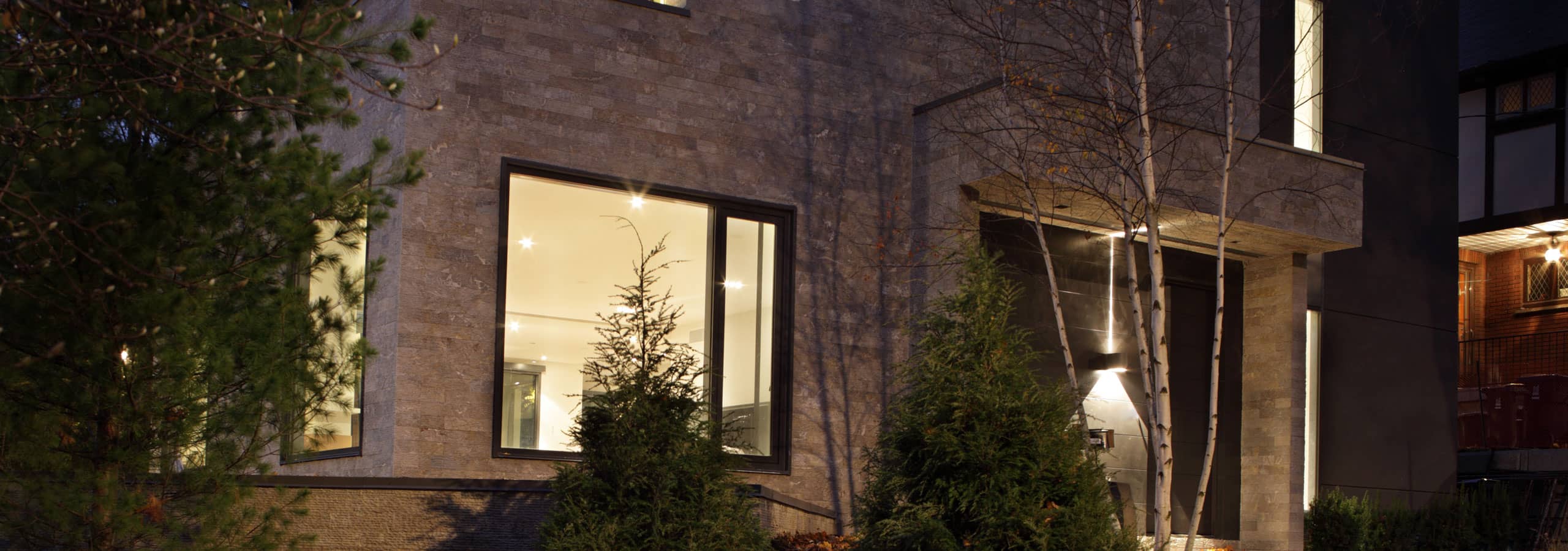
The trees and the lots. Lawrence Park was designed as a garden suburb and it still reads like one, with deep properties, real gardens and ravine walks instead of laneways. The housing stock is genuinely beautiful: Georgian, Tudor-revival, Colonial and English-cottage homes, most built between roughly 1910 and the late 1940s, on a scale you rarely see this close to the core. Add some of the best schools in the city and a quiet that money usually can’t buy in Toronto, and the appeal is obvious.
What We Don’t Love
It is very expensive and very quiet, and quiet cuts both ways. If you like the buzz of a main street outside your door, you will find Lawrence Park sleepy. Much of it is car-dependent, particularly the Bayview side, which is a real walk from the subway. There is also an ongoing tension over teardowns: heritage-scale houses being replaced by much larger new builds that some long-time residents feel break the look and proportion of the original streets. And the cost of entry is, frankly, a wall. This is not a neighbourhood you ease into.
Real Estate
Lawrence Park is a detached-house neighbourhood first and foremost. Expect older, larger homes on deep lots, many of them original-era and many of them renovated or rebuilt over the years. Streets like Mount Pleasant Road, Dawlish Avenue, St Edmunds Drive and the roads winding down toward the ravine are the heart of it. Prices are high and competition to get in is fierce, partly because so few houses trade hands in any given year. It is a long-hold neighbourhood: people buy here to stay.
If you are weighing Lawrence Park against its neighbours, it is worth comparing notes with the area just south. See our guide to Lawrence Park South, which shares some of the same garden-suburb DNA at a different price and feel. For something busier and more walkable nearby, look at Davisville Village and Yonge & St Clair. And to see what is on the market right now, browse current Lawrence Park listings. Current pricing and sales data are in the live TRREB statistics block below.
Schools
ELEMENTARY SCHOOLS
The Lawrence Park School
Sunny View Jr & Sr Public School
Bedford Park Public School
Glenview Senior Public School
Blessed Sacrament Catholic School
John Ross Robertson Junior Public School
Allenby Junior Public School
Glen Park Public School
SENIOR SCHOOLS
PRIVATE SCHOOLS
Blyth Academy
TFS International School
Havergal College
Stagecoach Performing Arts School
St. Clement’s School
For school rankings and Fraser Institute scores, see our interactive Toronto school map.
Transit
Lawrence subway station, on Line 1 at Yonge and Lawrence, is the main transit link, and it now has elevators after an accessibility upgrade. From there the ride downtown is direct. The honest caveat is access: much of the neighbourhood is a fair distance from the station, and the eastern half near Bayview has no rapid transit of its own, so cars and buses do a lot of the work. Mount Pleasant Road, Avenue Road, Lawrence Avenue and Yonge Street handle the driving, and the 401 is a short hop north.
Want To Learn More About Lawrence Park?
Reach out below and we'll be in touch right away.