

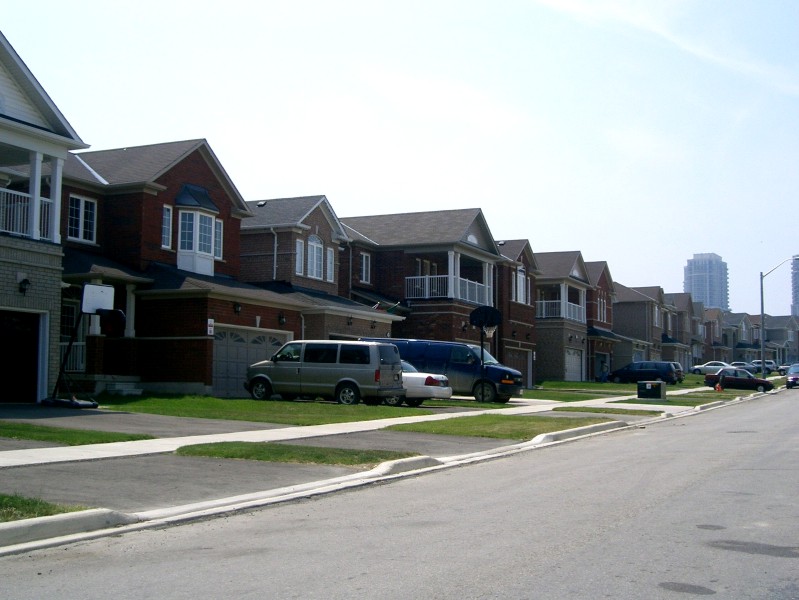
Welcome To Applewood
Applewood is one of Mississauga’s oldest neighbourhoods, carved out of apple orchards starting in the 1950s, and you can still read that history in the streets. Bungalows, two-storeys, back-splits and side-splits line most of it, on lots that are wider and more mature than anything built in Mississauga since. It sits in the city’s far east, hard against the Etobicoke border, which is the whole appeal for a lot of people who buy here.
The name actually covers three pockets… Applewood Acres, Applewood Heights and Applewood Hills… and they don’t all feel the same. Acres, south of the Queensway, is the quiet, leafy, family-association-barbecue part. Closer to Dixie and Bloor you get condo and townhouse complexes and a more industrial, workaday edge. It’s a practical neighbourhood that trades some polish for space, trees and a short hop into the city.
Properties For Sale
Applewood FAQs
Applewood is one of the more attainable pockets in south-central Mississauga, though “attainable” is relative these days. Detached bungalows and splits are the bulk of the market and generally the priciest stock; semis and townhouses sit below that; and condos and condo townhouses near Dixie and Bloor are the entry point for budget-conscious buyers. For current numbers, check the live TRREB statistics block further down this page and browse what’s actually listed today:
East Mississauga, against the Etobicoke Creek and the Toronto border. Roughly bounded by Cawthra Road to the west, Burnhamthorpe to the north, Dundas to the south, and the creek and Etobicoke past Dixie to the east. The QEW and Dixie GO are right there.
It’s built for them. Wide lots, mature trees, a high kid count, good-scoring local schools, and an active homeowners’ association in Applewood Acres that runs neighbourhood events. The trail system along Etobicoke Creek is a genuine bonus for anyone with dogs, bikes or restless children.
This is the honest soft spot. Dixie GO on the Milton line gets you to Union without fighting the Gardiner, but the Milton line shares track with freight, so service is limited and weekday-peak focused. Because you’re so close to the border, plenty of residents just drive to Kipling Station and take the subway in instead.
Pocket-dependent. The residential streets are pleasant to walk but car-oriented… most errands mean a short drive to the plazas along Dundas, Bloor or Dixie. This is a neighbourhood where you’ll want a car.
Around the Neighbourhood
Cultural landmarks: The anchor is the Mississauga Chinese Centre at 888 Dundas Street East, a 100,000-plus-square-foot complex of Asian restaurants, a supermarket and shops that pulls visitors from well beyond Applewood.
Hot local spots: Dundas from Dixie to Cawthra is a long ribbon of plazas and outlets where most of the eating and shopping happens, and China China Palace in the Applewood Hills Plaza on Bloor is a long-running local Chinese-and-Thai standby.
Parks & green space: The Applewood Trail runs about three kilometres through the Applewood Hills Greenbelt along Little Etobicoke Creek, good for walking, running and biking; Garnetwood Park adds tennis courts and washrooms, and Applewood Acres holds its summer events at the local parks through the homeowners’ association.
Your Typical Neighbour
Your typical Applewood neighbour skews toward families, often multi-generational and frequently with members born outside Canada, drawn by the rare combination of detached space, trees and a short drive into Toronto. A clean census figure for Applewood as its own community isn’t published directly by Statistics Canada, so for scale: Mississauga as a whole had a population of 717,961 in the 2021 Census, a median total household income of about $102,000, and a homeownership rate of 70.4 percent. Applewood reads as a more value-oriented, slightly more rental-mixed pocket than that city-wide average, especially around the Dixie-Bloor condos.
Source: Statistics Canada, 2021 Census of Population, Mississauga, City (CY)
What We Love
Space and trees you can’t find in newer Mississauga, on real 1950s lots. The Etobicoke Creek trail system on your doorstep. And the location: being right on the Etobicoke border means Toronto is a genuinely short hop, while detached homes here still cost less than comparable houses in Mississauga’s pricier southern lakeside pockets. For buyers who want a house and a yard without the Lorne Park price tag, Applewood does a lot of quiet work.
What We Don’t Love
Transit into the city is the real weak point. You’re close to Toronto, but Dixie GO’s Milton-line service is limited and freight-constrained, so a lot of people end up driving to Kipling anyway. Some pockets, especially nearer the Dundas industrial strip and the Dixie-Bloor complexes, feel more workaday than homey. And a specific caution on the older condo and townhouse corporations around Dixie and Bloor: a few have a documented history of financial trouble, so read the status certificate carefully before you commit.
Real Estate
The housing stock is the draw here: mid-century detached bungalows, two-storeys, back-splits and side-splits on generous, mature lots, with Applewood Acres holding some of the most sought-after streets. For more price-conscious buyers there’s a real supply of condos and condo townhouses clustered around Dixie and Bloor, which is where the entry-level money goes. One repeated caution: some of those older complexes have a history of condo-corporation financial difficulty, so a thorough status-certificate review is non-negotiable. If you’re weighing Applewood against other east-and-south Mississauga options, it’s worth comparing against the waterfront energy of Port Credit, the redeveloping lakeside pocket of Lakeview, and the higher-end streets of Lorne Park. Current Applewood listings and live pricing are below in the stats block and here.
Schools
PUBLIC SCHOOLS
Elm Drive PS
Corsair PS
Queenston Drive PS
The Valleys Sr PS
Chris Hadfield PS
Briarwood PS
ÉS Gaétan Gervais
Camilla Road Sr PS
É Élém Horizon Jeunesse
Fairview PS
T. L. Kennedy SS
ÉS Gaétan Gervais
CATHOLIC & PRIVATE SCHOOLS
Mississauga Secondary Academy
Bridge International School
USCA Academy
Lynden School
ÉSC Sainte-Famille
Sts. Peter & Paul Catholic School
Corpus Christi School
ÉÉC René-Lamoureux
Father Michael Goetz SS
Bishop Scalabrini School
For school rankings and Fraser Institute scores, see our interactive Mississauga school map.
Transit
MiWay buses run throughout Applewood. For commuters, Dixie GO on the Milton line gets you downtown without the Gardiner, with the honest caveat that the Milton corridor shares track with freight, so trains are limited and weekday-peak weighted. Because Applewood hugs the Toronto border, many residents skip GO entirely and drive to Kipling Station to catch the subway into the core. The QEW is right at the south edge for drivers.
Property Statistics in Applewood
Detached Houses - Statistics
Q2 2026
$1,226,000
Average Price
55
New Listings
22
Properties Sold
23
Average Days on Market
99%
% of Asking Price
semi-detached - Statistics
Q2 2026
$907,000
Average Price
26
New Listings
9
Properties Sold
15
Average Days on Market
97%
% of Asking Price
townhome - Statistics
Q2 2026
$541,000
Average Price
36
New Listings
8
Properties Sold
30
Average Days on Market
96%
% of Asking Price
Condos - Statistics
Q2 2026
$478,000
Average Price
39
New Listings
14
Properties Sold
35
Average Days on Market
95%
% of Asking Price
All Properties - Statistics
Q2 2026
$874,694
Average Price
164
New Listings
56
Properties Sold
26
Average Days on Market
98%
% of Asking Price
Source: TRREB Statistics
Want To Learn More About Applewood?
Reach out below and we'll be in touch right away.